Supreme Court, again, entertains Republican challenge to Obamacare
Supreme Court, again, entertains Republican challenge to Obamacare
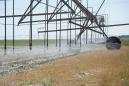
A slow-moving crisis threatens the U.S. Central Plains, which grow a quarter of the nation's crops. Underground, the region's lifeblood – water – is disappearing, placing one of the world's major food-producing regions at risk. The Ogallala-High Plains Aquifer is one of the world's largest groundwater sources, extending from South Dakota down through the Texas Panhandle across portions of eight states. Its water supports US$35 billion in crop production each year.But farmers are pulling water out of the Ogallala faster than rain and snow can recharge it. Between 1900 and 2008 they drained some 89 trillion gallons from the aquifer – equivalent to two-thirds of Lake Erie. Depletion is threatening drinking water supplies and undermining local communities already struggling with the COVID-19 pandemic, the opioid crisis, hospital closures, soaring farm losses and rising suicide rates. In Kansas, "Day Zero" – the day wells run dry – has arrived for about 30% of the aquifer. Within 50 years, the entire aquifer is expected be 70% depleted. Some observers blame this situation on periodic drought. Others point to farmers, since irrigation accounts for 90% of Ogallala groundwater withdrawals. But our research, which focuses on social and legal aspects of water use in agricultural communities, shows that farmers are draining the Ogallala because state and federal policies encourage them to do it. A production treadmillAt first glance, farmers on the Plains appear to be doing well in 2020. Crop production increased this year. Corn, the largest crop in the U.S., had a near-record year, and farm incomes increased by 5.7% over 2019. But those figures hide massive government payments to farmers. Federal subsidies increased by a remarkable 65% this year, totaling $37.2 billion. This sum includes money for lost exports from escalating trade wars, as well as COVID-19-related relief payments. Corn prices were too low to cover the cost of growing it this year, with federal subsidies making up the difference. Our research finds that subsidies put farmers on a treadmill, working harder to produce more while draining the resource that supports their livelihood. Government payments create a vicious cycle of overproduction that intensifies water use. Subsidies encourage farmers to expand and buy expensive equipment to irrigate larger areas. With low market prices for many crops, production does not cover expenses on most farms. To stay afloat, many farmers buy or lease more acres. Growing larger amounts floods the market, further reducing crop prices and farm incomes. Subsidies support this cycle.Few benefit, especially small and midsized operations. In a 2019 study of the region's 234 counties from 1980 to 2010, we found that larger irrigated acreage failed to increase incomes or improve education or health outcomes for residents. Focus on policy, not farmersFour decades of federal, state and local conservation efforts have mainly targeted individual farmers, providing ways for them to voluntarily reduce water use or adopt more water-efficient technologies. While these initiatives are important, they haven't stemmed the aquifer's decline. In our view, what the Ogallala Aquifer region really needs is policy change. A lot can be done at the federal level, but the first principle should be "do no harm." Whenever federal agencies have tried to regulate groundwater, the backlash has been swift and intense, with farm states' congressional representatives repudiating federal jurisdiction over groundwater. Nor should Congress propose to eliminate agricultural subsidies, as some environmental organizations and free-market advocates have proposed. Given the thin margins of farming and longstanding political realities, federal support is simply part of modern production agriculture. With these cautions in mind, three initiatives could help ease pressure on farmers to keep expanding production. The U.S. Department of Agriculture's Conservation Reserve Program pays farmers to allow environmentally sensitive farmland to lie fallow for at least 10 years. With new provisions, the program could reduce water use by prohibiting expansion of irrigated acreage, permanently retiring marginal lands and linking subsidies to production of less water-intensive crops.These initiatives could be implemented through the federal farm bill, which also sets funding levels for nonfarm subsidies such as the Supplemental Nutrition Assistance Program, or SNAP. SNAP payments, which increase needy families' food budgets, are an important tool for addressing poverty. Increasing these payments and adding financial assistance to local communities could offset lower tax revenues that result from from farming less acreage. Amending federal farm credit rates could also slow the treadmill. Generous terms promote borrowing for irrigation equipment; to pay that debt, borrowers farm more land. Offering lower rates for equipment that reduces water use and withholding loans for standard, wasteful equipment could nudge farmers toward conservation.The most powerful tool is the tax code. Currently, farmers receive deductions for declining groundwater levels and can write off depreciation on irrigation equipment. Replacing these perks with a tax credit for stabilizing groundwater and substituting a depreciation schedule favoring more efficient irrigation equipment could provide strong incentives to conserve water. Rewriting state water lawsWater rights are mostly determined by state law, so reforming state water policies is crucial. Case law demonstrates that simply owning water rights does not grant the legal right to waste water. For more than a century courts have upheld state restrictions on waste, with rulings that allow for adaptation by modifying the definitions of "beneficial use" and "waste" over time. Using these precedents, state water agencies could designate thirsty crops, such as rice, cotton or corn, as wasteful in certain regions. Regulations preventing unreasonable water use are not unconstitutional. [Deep knowledge, daily. Sign up for The Conversation's newsletter.]Allowing farmers some flexibility will maximize profits, as long as they stabilize overall water use. If they irrigate less – or not at all – in years with low market prices, rules could allow more irrigation in better years. Ultimately, many farmers – and their bankers – are willing to exchange lower annual yields for a longer water supply. As our research has shown, the vast majority of farmers in the region want to save groundwater. They will need help from policymakers to do it. Forty years is long enough to learn that the Ogallala Aquifer's decline is not driven by weather or by individual farmers' preferences. Depletion is a structural problem embedded in agricultural policies. Groundwater depletion is a policy choice made by federal, state and local officials. Stephen Lauer and Vivian Aranda-Hughes, former doctoral students at Kansas State University, contributed to several of the studies cited in this article.This article is republished from The Conversation, a nonprofit news site dedicated to sharing ideas from academic experts. It was written by: Matthew R Sanderson, Kansas State University; Burke Griggs, Washburn University, and Jacob A. Miller, Kansas State University.Read more: * Farmers are drawing groundwater from the giant Ogallala Aquifer faster than nature replaces it * Crop insurance is good for farmers, but not always for the environmentMatthew R Sanderson has received funding from the U.S. National Science Foundation and the U.S. Department of Agriculture. Burke W. Griggs has received funding from the National Science Foundation and the U.S. Department of Agriculture. Jacob A. Miller has received funding from the National Science Foundation.
харьков двери межкомнатные
И вот еще харьков двери межкомнатные сайт https://dimir.ua/interior - цены фото каталоги на любой кошелек харьков двери межкомнатные.
Любой дом стартует с двери: как раз она формирует центральное мнение о квартире, посему ее конфигурация и оформление должны подходить всему внутреннему облачению апартаментов.
Для того чтобы харьков двери межкомнатные, желательно перво-наперво ухватить суть дела в массе прекрасных рекомендаций от изготовителей межкомнатных дверей. Избрание дверей может быть продиктован разными причинами. Потому прежде чем межкомнатные двери заказать, надо определиться с образцом, цветом, отделкой и изготовителем. Межкомнатные двери обязаны соответствовать интерьеру Вашего помещения, не выбиваться из единой концепции и быть специфической частью. Выбор межкомнатных дверей на рынке Украины вдосталь большой. Непосредственно прославленными есть шпонированные, ламинированные двери с ПВХ облицовкой.
Двери в натуральном покрытии - это такие межкомнатные двери приобрести которые Вы можете на все равно какой вкус. Двери, облицованные шпоном дорогих видов деревьев, ничуть не уступают по содержанию дверям, созданным по несхожим способам, и являются как раз известными средь всех вариантов и моделей дверей. Двери совершенно не деформируются при изменении мокроты и температуры среды в помещении. Из натурального шпона межкомнатные двери оплатить Вы можете подешевле, чем межкомнатные двери из дерева, при этом на внешний вид их не вероятно распознать. Двери из ламината отличаются от остальных специфическим классом стоения, а извне они обтянуты экологически стерильным элементом ( ламинатом ), базой которго есть естественные волокна. ламинат не обесцвечивается через время, не изменяется и здорово стойкий к разности температуры и увеличенной отсырелости. Ламинированные межкомнатные двери выбрать возможно сплошь в всяком роде и по понятной цене. Плюсом ламинированных межкомнатных дверей есть то, что за ними предельно легко присматривать, они стойки к царапинам, ударам и сколам.
Ещё одной модификацией дверей значатся межкомнатные двери, каковые вакуумируются современным небиологическим сырьем - поливинилхлоридом (ПВХ). Покрытые этим элементом межкомнатные двери выбрать возможно по сравнительно маленькой стоимости. Материал ПВХ абсолютно не токсичный, не топкий и характеризуется величайшей прочностью к разности температуры и мокроте.
A woman shed infectious coronavirus particles for at least 70 days without showing symptoms, a study found
The case study suggests that immunocompromised patients could be infectious longer than previously thought.
https://advtsite.com/ - это международный проект для производителей, оптовых поставщиков и покупателей различного рода товаров используемых во многих отраслях промышленности и в быту. Все цены указаны в долларах США и являются рекомендованными, окончательный прайс и условия поставки прописываются в контрактах. Опт подразумевает покупку от определенной суммы или количества. Под производством понимается сам процесс производства, добыча полезных ископаемых, выращивание сельхозкультур, лов и заготовка морепродуктов и мяса животных.
производство и оптовая продажа товаров
Покупка. На странице самого товара, под ним, находятся контактные данные оптовиков. Вы можете напрямую обратиться к ним, через мессенджеры (VIBER, WHATSAPP, TELEGRAM) или же напишите письмо в форму заказа, внизу товарной карточки. Менеджеры по продажам, как только получат ваше обращение, в ближайшее время с вами свяжутся и уточнят все детали по вашему заказу.
Продажа. Если вы или ваша компания заинтересована в расширении рынка сбыта и привлечение новых клиентов и предлагаемая к продаже продукция совпадает с нашим ассортиментом - письменно обратитесь в нашу организацию с вашим предложением о сотрудничестве. В письме обязательно укажите: полные реквизиты своей компании, номенклатуру предлагаемых к реализации изделий, наличие сертификатов, адреса складов хранения, рекомендуемые оптовые цены. При получении запроса от клиента, на покупку данного вида продукции, мы предложим вас в роли поставщика.
Производство. Отличие размещения заказов у производителя от оптовой покупки отличается тем, что при производстве изделий, требуется время на их изготовление. При оптовой покупке, предлагаемые на продажу товары, находятся на складах поставщика. Также при изготовлении на заказ возможна реализация не стандартных, индивидуальных видов оформления, либо же изготовление с особыми свойствами или характеристиками. За годы работы на оптовом рынке наша команда наладила доверительные на профессиональном уровне отношения со многими производителями. Напишите запрос, внизу карточки изделия. Менеджеры отвечающие за размещение заказов производства проинформируют вас о всех возможных и наилучших вариантах.
Цена. Понимая сложившуюся экономическую ситуацию во всем мире, мы стремимся свести переговоры на удовлетворение обоих сторон. Но все же, окончательная цена в ряде случаев зависит от объема и условий поставки: EXW; FCA; CPT; CIP; DAT; DAP; DDP; FAS; FOB; CFR; CIF.
Гарантия. В сфере оптовых поставок мы работаем исключительно с проверенными поставщиками. Все важные моменты прописаны в контракте на поставку. Вся продукция имеет сертификаты качества того региона, в который она поставляется и полностью соответствует требованиям стандартов. Самое главное для нас и нашей компании - это репутация! Мы дорожим каждым нашим клиентом, от мелкооптового покупателя, до крупного оптовика. Мы отвечаем на всю поступающую рекламацию и при отгрузке клиенту бракованного изделия, берем на себя все расходы по транспортировке/замене полуфабриката.
Экспорт. Наша компания имеет все разрешительные документы для проведения экспортных операций и торговли на международном рынке. При экспорте, на все товары предоставляются документы установленного образца: сертификат соответствия товара от заводов производителей либо поставщиков для таможни, товарно-транспортная накладная и другие необходимые данные. Кстати, при продаже продукции нерезидентам, НДС (налог на добавленную стоимость) не учитывается.
Импорт. Наличие штатных юристов, бухгалтеров и представителей во большинстве регионов планеты, позволяют нам осуществлять сопровождение импортирования - от проверки качества товаров и документов до растаможивания в таможенной зоне клиента и передачи на склад.
Первичный алюминий А0 (технической чистоты) поставляется по ГОСТ 11069-2001. Содержание алюминия не менее 99,70%. Содержание других веществ: кремний 0,15 железо 0,16 медь 0,01 марганец 0,03 магний 0,02 цинк 0,04 галлий 0,03 титан 0,01 прочие примеси не более 0,03 каждой в отдельности. Слиток отмечается двумя черными вертикальными полосами.
Алюминий А0 поставляется чушками. Вес одной чушки: 14-16 килограмм. Чушки упаковываются в пачки, вес каждой пачки от 800 до 1000 кг. Купить алюминий А0 в чушках вы можете в компании "Алюминий" от производителя А7 в чушках алюминий купить. Минимальная партия поставки алюминия А0 от 20 тонн. По договоренности возможна поставка меньшего тоннажа, но не менее одной пачки слитков. Т. е. пачки не распаковываются.
We asked nine legal experts about Trump's latest lawsuit challenging election results in Pennsylvania. Their verdict: Dead on arrival.
President Donald Trump's campaign has sued Pennsylvania elections officials over mail balloting. Legal experts say the case is baseless.
Dr. Marcella Nunez Smith to co-chair Biden coronavirus task force
President-elect Joe Biden has named Dr. Marcella Nunez -Smith, the Yale School of Medicine professor, to his newly formed COVID-19 advisory board. As President-elect Joe Biden prepares to take office, he announced a new COVID-19 task force as he plans to make coronavirus a priority. Among those hired for the newly formed advisory board include Dr. Marcella Nunez-Smith, serving as co-chair.
Farmers are depleting the Ogallala Aquifer because the government pays them to do it
A slow-moving crisis threatens the U.S. Central Plains, which grow a quarter of the nation's crops. Underground, the region's lifeblood – water – is disappearing, placing one of the world's major food-producing regions at risk. The Ogallala-High Plains Aquifer is one of the world's largest groundwater sources, extending from South Dakota down through the Texas Panhandle across portions of eight states. Its water supports US$35 billion in crop production each year.But farmers are pulling water out of the Ogallala faster than rain and snow can recharge it. Between 1900 and 2008 they drained some 89 trillion gallons from the aquifer – equivalent to two-thirds of Lake Erie. Depletion is threatening drinking water supplies and undermining local communities already struggling with the COVID-19 pandemic, the opioid crisis, hospital closures, soaring farm losses and rising suicide rates. In Kansas, "Day Zero" – the day wells run dry – has arrived for about 30% of the aquifer. Within 50 years, the entire aquifer is expected be 70% depleted. Some observers blame this situation on periodic drought. Others point to farmers, since irrigation accounts for 90% of Ogallala groundwater withdrawals. But our research, which focuses on social and legal aspects of water use in agricultural communities, shows that farmers are draining the Ogallala because state and federal policies encourage them to do it. A production treadmillAt first glance, farmers on the Plains appear to be doing well in 2020. Crop production increased this year. Corn, the largest crop in the U.S., had a near-record year, and farm incomes increased by 5.7% over 2019. But those figures hide massive government payments to farmers. Federal subsidies increased by a remarkable 65% this year, totaling $37.2 billion. This sum includes money for lost exports from escalating trade wars, as well as COVID-19-related relief payments. Corn prices were too low to cover the cost of growing it this year, with federal subsidies making up the difference. Our research finds that subsidies put farmers on a treadmill, working harder to produce more while draining the resource that supports their livelihood. Government payments create a vicious cycle of overproduction that intensifies water use. Subsidies encourage farmers to expand and buy expensive equipment to irrigate larger areas. With low market prices for many crops, production does not cover expenses on most farms. To stay afloat, many farmers buy or lease more acres. Growing larger amounts floods the market, further reducing crop prices and farm incomes. Subsidies support this cycle.Few benefit, especially small and midsized operations. In a 2019 study of the region's 234 counties from 1980 to 2010, we found that larger irrigated acreage failed to increase incomes or improve education or health outcomes for residents. Focus on policy, not farmersFour decades of federal, state and local conservation efforts have mainly targeted individual farmers, providing ways for them to voluntarily reduce water use or adopt more water-efficient technologies. While these initiatives are important, they haven't stemmed the aquifer's decline. In our view, what the Ogallala Aquifer region really needs is policy change. A lot can be done at the federal level, but the first principle should be "do no harm." Whenever federal agencies have tried to regulate groundwater, the backlash has been swift and intense, with farm states' congressional representatives repudiating federal jurisdiction over groundwater. Nor should Congress propose to eliminate agricultural subsidies, as some environmental organizations and free-market advocates have proposed. Given the thin margins of farming and longstanding political realities, federal support is simply part of modern production agriculture. With these cautions in mind, three initiatives could help ease pressure on farmers to keep expanding production. The U.S. Department of Agriculture's Conservation Reserve Program pays farmers to allow environmentally sensitive farmland to lie fallow for at least 10 years. With new provisions, the program could reduce water use by prohibiting expansion of irrigated acreage, permanently retiring marginal lands and linking subsidies to production of less water-intensive crops.These initiatives could be implemented through the federal farm bill, which also sets funding levels for nonfarm subsidies such as the Supplemental Nutrition Assistance Program, or SNAP. SNAP payments, which increase needy families' food budgets, are an important tool for addressing poverty. Increasing these payments and adding financial assistance to local communities could offset lower tax revenues that result from from farming less acreage. Amending federal farm credit rates could also slow the treadmill. Generous terms promote borrowing for irrigation equipment; to pay that debt, borrowers farm more land. Offering lower rates for equipment that reduces water use and withholding loans for standard, wasteful equipment could nudge farmers toward conservation.The most powerful tool is the tax code. Currently, farmers receive deductions for declining groundwater levels and can write off depreciation on irrigation equipment. Replacing these perks with a tax credit for stabilizing groundwater and substituting a depreciation schedule favoring more efficient irrigation equipment could provide strong incentives to conserve water. Rewriting state water lawsWater rights are mostly determined by state law, so reforming state water policies is crucial. Case law demonstrates that simply owning water rights does not grant the legal right to waste water. For more than a century courts have upheld state restrictions on waste, with rulings that allow for adaptation by modifying the definitions of "beneficial use" and "waste" over time. Using these precedents, state water agencies could designate thirsty crops, such as rice, cotton or corn, as wasteful in certain regions. Regulations preventing unreasonable water use are not unconstitutional. [Deep knowledge, daily. Sign up for The Conversation's newsletter.]Allowing farmers some flexibility will maximize profits, as long as they stabilize overall water use. If they irrigate less – or not at all – in years with low market prices, rules could allow more irrigation in better years. Ultimately, many farmers – and their bankers – are willing to exchange lower annual yields for a longer water supply. As our research has shown, the vast majority of farmers in the region want to save groundwater. They will need help from policymakers to do it. Forty years is long enough to learn that the Ogallala Aquifer's decline is not driven by weather or by individual farmers' preferences. Depletion is a structural problem embedded in agricultural policies. Groundwater depletion is a policy choice made by federal, state and local officials. Stephen Lauer and Vivian Aranda-Hughes, former doctoral students at Kansas State University, contributed to several of the studies cited in this article.This article is republished from The Conversation, a nonprofit news site dedicated to sharing ideas from academic experts. It was written by: Matthew R Sanderson, Kansas State University; Burke Griggs, Washburn University, and Jacob A. Miller, Kansas State University.Read more: * Farmers are drawing groundwater from the giant Ogallala Aquifer faster than nature replaces it * Crop insurance is good for farmers, but not always for the environmentMatthew R Sanderson has received funding from the U.S. National Science Foundation and the U.S. Department of Agriculture. Burke W. Griggs has received funding from the National Science Foundation and the U.S. Department of Agriculture. Jacob A. Miller has received funding from the National Science Foundation.
 И вот еще харьков двери межкомнатные сайт https://dimir.ua/interior - цены фото каталоги на любой кошелек харьков двери межкомнатные.
 Первичный алюминий А0 (технической чистоты) поставляется по ГОСТ 11069-2001.


Комментариев нет:
Отправить комментарий